Sareb’s social housing contribution exceeds 11,500 homes
The Social Housing and Help to Work Programme has given more than 600 vulnerable people the help they need to escape unemployment
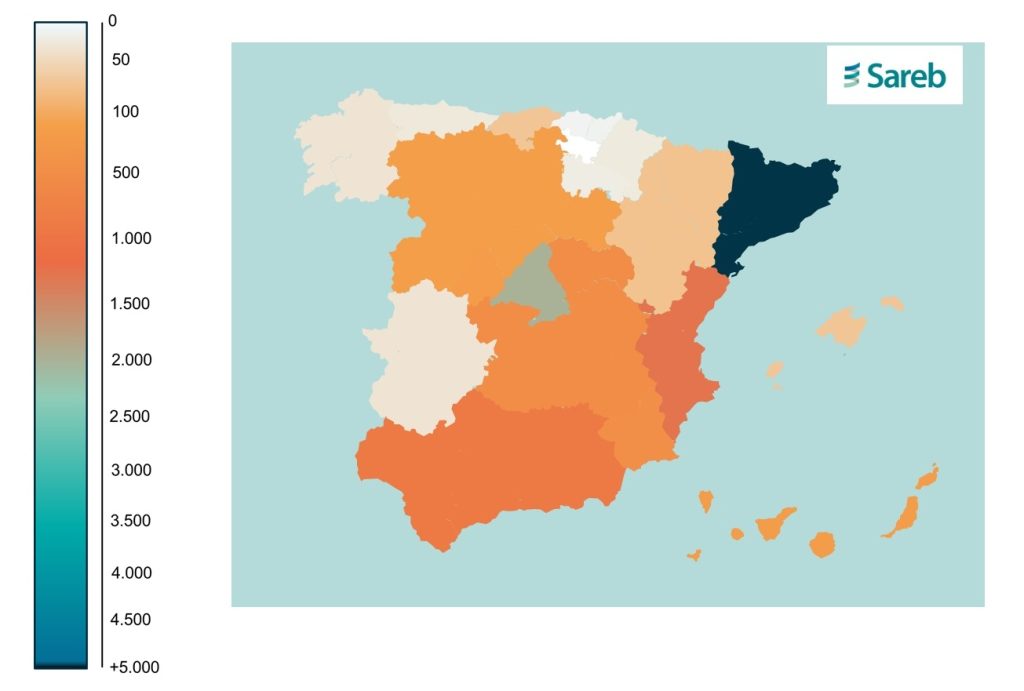
More than 11,500 units of Sareb’s portfolio have been given over to social housing, under social responsibility programmes launched in 2022 after the FROB (Fund for Orderly Bank Restructuring) acquired a majority stake in the company.
This initiative currently benefits more than 35,000 people facing vulnerability. The vast majority are tenants under the Social Housing and Help to Work Programme, which reaches approximately 9,800 households.
A further 1,625 homes have been transferred to local authorities through individual Agreements, as well as the 180 refurbished properties offered free of charge to families affected by the Dana storms, through partnerships with the Ministry of Housing, city councils and the Generalitat Valenciana.
One of the key milestones of the last financial year was the continued expansion of the Help to Work Programme, which has supported more than 600 people on their journeys to employment. This marks a significant step-up in capacity, equivalent to one return to the workplace for every day of the year. In total, around 700 new employment contracts were signed under the scheme in 2025.
“We have poured a lot of energy into this programme in recent years, and the results speak for themselves. We’re helping so many families escape the shadow of social exclusion in a way that is economically sustainable for the company,” explains Pau Pérez de Acha, Sareb’s Director of Social and Affordable Housing.
Sareb’s social housing contracts are based on a principle of mutual responsibility. Its housing managers commit to helping families navigate the options for government support, get utilities up and running, access training programmes and find their way back to work, advising on CV-writing and letting them know when suitable vacancies arise.
This collaborative approach is empowering families to raise their standard of living, with an average increase in household income of over 20%. The default rate under the Social Housing Programme stands at 10.6% (missed rental payments as a proportion of the total amount charged over the last 12 months).
The default rate under the Social Housing Programme stands at 10.6% (missed rental payments as a proportion of the total amount charged over the last 12 months). This figure is significantly lower than the sector average.
Sareb continues to drive its social impact initiatives.
The company is also focused on transferring its residential portfolio to CASA47 (Ministry of Housing).